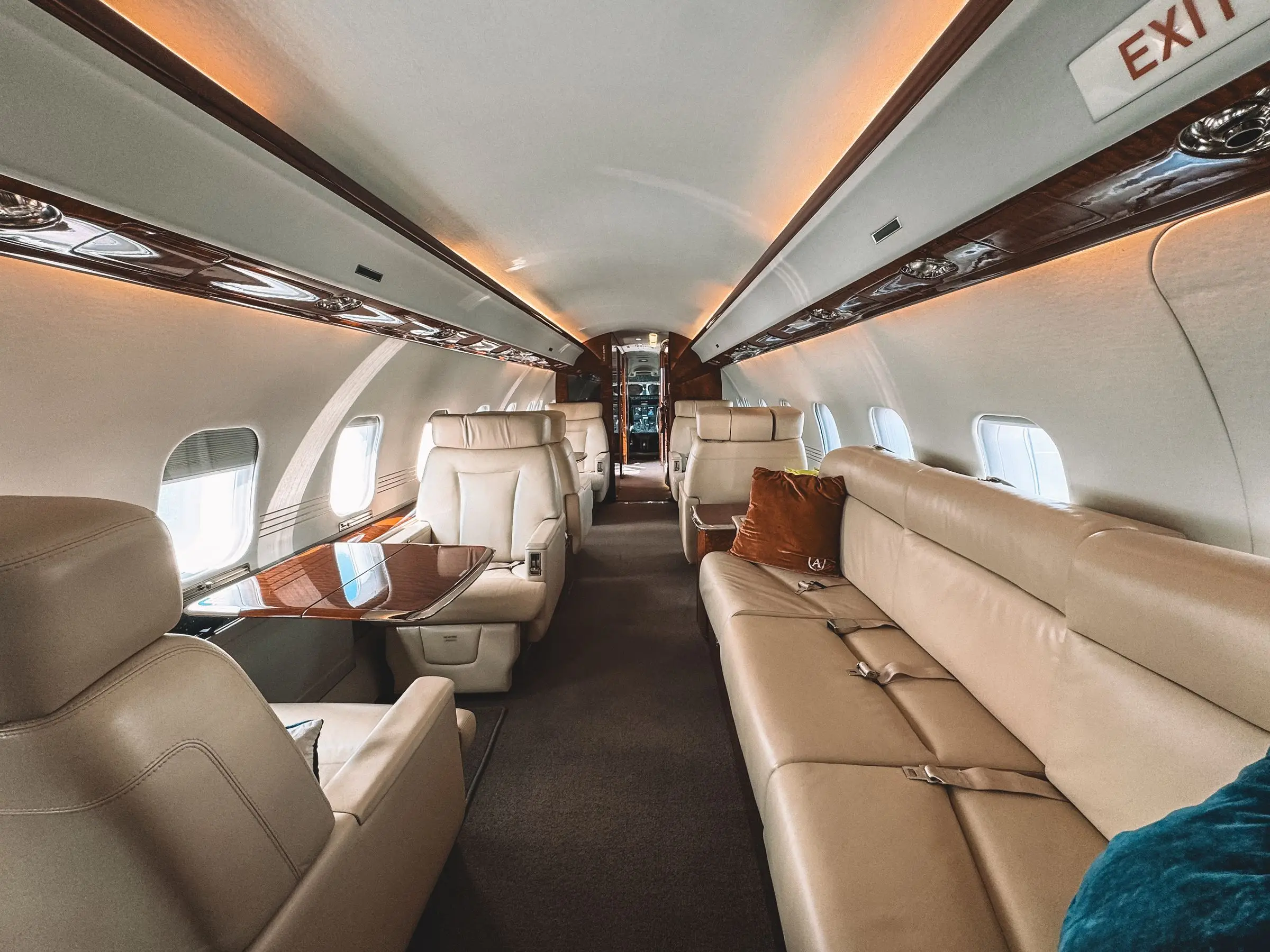
01 · The basics What a jet card is
A jet card is a prepaid way to fly private without owning or leasing an aircraft. You fund an account up front, then fly a chosen cabin class at pre-agreed terms.
i.Fixed hourly pricing
Rates are set by aircraft category, so you know roughly what a trip costs before you book, subject to fees, fuel adjustments and taxes.
ii.Prepaid or deposit
You buy a block of hours (25 is a common size) or deposit a dollar balance. Each flight is debited from it.
iii.Guaranteed availability
Book within the program’s notice window and an aircraft is guaranteed, with exceptions and longer notice on peak days.
Unlike fractional ownership, you own nothing and usually sign no multi-year contract. Unlike on-demand charter, you trade a large upfront commitment for consistency: the same terms, one point of contact, and an aircraft when you need it. Your flights are typically operated by certificated charter operators, either the program’s own fleet or vetted third parties.
02 · Card types Four common types of jet card
Names vary by provider, but most programs fall into one of these families. Many blend features, so read the terms rather than the label.
Fixed-rate card
An hourly rate for your aircraft category is set when you buy and holds for the life of the card, subject to fuel adjustments. Typically the most predictable option, and often the most expensive per hour.
Dynamic or capped card
You are quoted per trip, usually against market rates, sometimes with a cap or a discount. Can cost less on routine flights, with less certainty on busy dates.
Debit or points card
You deposit a dollar balance and each flight is debited at the program’s prevailing rate, which may change. Flexible across aircraft sizes and generally less rigid on terms.
Membership hybrid
An annual or initiation fee unlocks member pricing, sometimes paired with a smaller deposit, shared-seat access or perks. Lower commitment, with guarantees that vary widely.
03 · Pricing How jet card pricing typically works
The headline hourly rate is only the starting point. What you actually pay depends on cabin class, how and when you fly, and a handful of terms that rarely appear in the headline.
Typical hourly ranges by cabin class
| Cabin class | Typical seats | Indicative hourly range* | Typical daily minimum |
|---|
| Turboprop | 6–8 | ~$5,000–$8,000 | ~1 hr |
|---|
| Light jet | 5–7 | ~$7,000–$11,000 | ~1 hr |
|---|
| Midsize | 7–8 | ~$9,000–$13,000 | ~1–1.5 hrs |
|---|
| Super-midsize | 8–9 | ~$11,000–$16,000 | ~1.5 hrs |
|---|
| Heavy / large-cabin | 10–16 | ~$15,000–$25,000+ | ~1.5–2 hrs |
|---|
*Broad, approximate U.S. ranges for orientation only, before taxes, fees and peak-day surcharges. They are not quotes and do not represent any specific provider. Rates vary by program, region, season, aircraft and fuel costs, and they change over time.
What moves the final number
- Hourly rate by cabin class
- The core price, set per aircraft category rather than per aircraft. Larger cabins cost more per hour but carry more passengers and fly farther nonstop.
- Minimum daily hours
- Many programs bill a minimum, often one to two hours, for each day you fly, so a 35-minute hop may be charged as a full hour or more.
- Taxi time
- Some programs add a fixed taxi allowance (often around six to twelve minutes) to each flight leg. Over a year of short trips, it adds up.
- Add-ons
- De-icing, catering, satellite Wi-Fi, ground transport, pets and special requests are commonly billed separately, sometimes at cost plus a handling fee.
- Fuel surcharges
- Even “fixed” rates may move with jet fuel prices through a published fuel adjustment, usually reviewed monthly or quarterly.
- Peak days
- High-demand dates can carry a surcharge, longer notice, higher daily minimums or no guarantee. Programs differ markedly in how many peak days they publish.
- Taxes and fees
- U.S. domestic flights are generally subject to a 7.5% federal excise tax plus a small per-passenger segment fee; international trips carry their own taxes. Confirm whether rates include them.
- One-way vs. round trip
- Many cards price one-way flights within a core service area. Outside it, you may pay repositioning (ferry) time, or round-trip pricing with waiting days.
- Call-out windows
- The notice needed for guaranteed availability, commonly about 24 to 72 hours on standard days and longer on peak days. Shorter notice may mean subject-to-availability.
- Rate locks
- How long your rate is fixed: the life of the card, a calendar year, or until the next price update. Ask what happens to locked rates if you top up.
- Refundability
- Some programs refund unused balances, often less a fee; others allow only extensions or transfers; some offer neither. Read this before you fund.
A simple way to compare
Ask each provider to price two or three of your real trips from the past year, all-in, including minimums, taxi time, fuel, fees and taxes. Comparing total trip cost is far more revealing than comparing hourly rates.
Compare jet card options Affiliate link: LiquidAir may earn a referral fee if you subscribe, at no extra cost to you. Disclosure.
04 · Fit Who a jet card suits, compared with on-demand charter
Annual flight hours are a useful first filter. Treat these as rules of thumb rather than cut-offs: how often you fly on peak days, how short your notice tends to be and your typical group size all shift the answer.
- Under ~10 hrs/yrOn-demand charter and empty legsA handful of trips rarely justifies a deposit. Quote each trip and watch for empty legs on routes you fly.
- ~10–25 hrs/yrCharter, membership or a smaller debit cardWorth comparing a membership or small card if you value faster booking and consistency over the lowest price.
- ~25–100 hrs/yrJet card territoryThe range where guaranteed availability and fixed rates most often justify the upfront commitment.
- ~50–150+ hrs/yrModel fractional alongside cardsFractional ownership or leases can become competitive, particularly with consistent, short-notice flying in one cabin class.
- ~200+ hrs/yrFractional or whole-aircraft ownershipAt very high utilization, owning or leasing an aircraft outright may be worth a professional analysis.
A jet card tends to fit if you…
- Fly regularly and often book with a few days’ notice
- Travel around holidays or events when charter supply is tight
- Want one set of terms, one contact and predictable budgeting
- Are testing private flying before a larger commitment
On-demand charter tends to fit if you…
- Fly a few trips a year, or irregularly
- Have flexible dates and can shop for price
- Need unusual routes, aircraft or multi-stop itineraries
- Prefer not to prepay or hold a balance with one provider
Where memberships and fractional fit. Memberships sit between charter and cards: a lower upfront commitment for member pricing and perks, with availability terms that vary. Fractional ownership sits above cards: higher upfront cost and a multi-year term, in exchange for an aircraft share and often the lowest effective hourly cost at high utilization. Flexible travelers can layer empty legs on top of any of these for opportunistic savings.
05 · Due diligence Key questions to ask any jet card provider
A good provider will answer all of these clearly and in writing. Vague answers on safety, guarantees or deposit protection are worth noticing.
Safety and operators
- Which operators will actually fly my trips, and are they FAA Part 135 certificated (or the local equivalent abroad)?
- Do those operators hold current third-party safety audits, such as ARGUS, Wyvern or IS-BAO, and can I see the rating for a specific flight?
- What are your pilot experience and crew minimums, and how do you vet subcontracted, or brokered, flights?
Availability and service
- Is availability guaranteed or subject to availability, and what notice (call-out window) secures the guarantee?
- How many peak days do you publish each year, and what changes on them: surcharge, notice, minimums or guarantee?
- What is your service area, and how are flights outside it priced?
- What happens if my aircraft has a mechanical issue: will you source a replacement of the same category or higher, and at whose cost?
Pricing in practice
- What are the daily minimums and taxi-time allowances for my aircraft category?
- Exactly which costs are outside the hourly rate: fuel adjustments, de-icing, catering, Wi-Fi, international fees and taxes?
- Is my rate locked, for how long, and does it change if I add funds?
- Could you price two or three of my real trips from last year, all-in?
Money and terms
- When do funds expire, and can the balance be extended, transferred or refunded? On what terms?
- How are customer deposits held: in escrow, a segregated account or on the company’s balance sheet?
- What is the cancellation window on standard and peak days, and what are the fees?
- What happens to my balance if the program is sold, changes terms or ceases operating?
Tip: on safety, ARGUS, Wyvern and IS-BAO are independent audit and registration programs. They complement, but do not replace, the operator’s regulatory certificate. See how LiquidAir works for how we approach partners.
06 · Compare Jet card vs. charter vs. membership vs. fractional vs. empty legs
Five ways to fly private, side by side. Programs differ widely, so use this as a framework, not a quote.
| Option | Upfront cost | Pricing | Availability guarantee | Flexibility | Best for |
|---|
| Jet card | Prepaid deposit or hour block, often low-to-mid six figures | Fixed, capped or debit hourly rates by cabin class, plus fees and taxes | Yes, within the call-out window; peak-day limits apply | Good: one-way pricing in the service area; categories may be interchangeable | Regular flyers, roughly 25–100 hrs/yr, who value certainty |
| On-demand charter | None; pay per trip | Quoted per trip; moves with demand, season and repositioning | No; subject to market availability | High: any aircraft, any route, but pricing and availability vary | Occasional flyers and one-off or complex trips |
| Membership | Annual or initiation fee; sometimes a smaller deposit | Member rates per trip; some programs include shared or set-route seats | Varies widely by program and tier | Moderate: depends on network, routes and tier | Frequent flyers on popular routes wanting lower commitment |
| Fractional | Purchase or lease of an aircraft share, plus monthly fees | Monthly management fee plus an occupied hourly rate | Yes, typically with short notice within the program fleet | Moderate: tied to the program fleet and a multi-year term | Heavy users, often 50–150+ hrs/yr, with consistent needs |
| Empty legs | None | Per flight, often discounted versus a full charter | No; routes and times are set by the operator and can change or cancel | Low: fixed one-way route and time window | Flexible travelers and opportunistic trips |
Hour bands and cost descriptions are general industry rules of thumb, not offers. Your routes, group size, aircraft needs and tax position all matter.
07 · FAQ Jet card questions, answered
What is a jet card, in one sentence?
A jet card is a prepaid private flying program: you fund an account or buy a block of hours, then fly a chosen aircraft category at pre-agreed hourly rates, with availability guaranteed when you book within the program's notice window.
How many hours a year should I fly before a jet card makes sense?
As a common rule of thumb, jet cards tend to suit people flying roughly 25 to 100 hours a year. Below that, on-demand charter and empty legs are often more cost-effective; well above it, fractional ownership may be worth modeling. Routes, group size, peak-day travel and how much you value guaranteed availability matter as much as the raw hours.
Is a jet card cheaper than chartering?
Not necessarily. On any single trip, a well-timed charter quote or an empty leg can cost less. What a card buys is price certainty and guaranteed availability, which tends to be most valuable during peak periods, for short-notice trips and for travelers who want consistency.
Do jet card funds or hours expire?
Often, yes. Many programs ask you to use the balance within a set period, commonly 12 to 24 months. Ask about expiry, extension options and whether unused funds are refundable, and on what terms, before you commit.
What are peak days?
Peak days are high-demand dates, typically around major holidays and events, when programs may add a surcharge, require longer booking notice, apply higher daily minimums or limit guaranteed availability. Each provider publishes its own calendar, and the number of peak days varies noticeably between programs.
Are taxes included in the hourly rate?
Usually not. U.S. domestic flights are generally subject to a 7.5% federal excise tax plus a small per-passenger segment fee, and international flights carry their own taxes and fees. Some programs quote rates inclusive of these; many add them on top, so confirm how each provider presents its pricing.
Is my deposit protected if the provider runs into trouble?
It depends entirely on the program. Prepaid balances are typically held by the provider, so its financial strength matters. Some programs offer escrow or third-party account arrangements; many do not. Ask directly how customer funds are held and what happens to unused balances if the company is sold or fails.
How do I check the safety of a jet card program?
Ask which operators actually fly your trips and confirm they hold the appropriate certificate (for example, FAA Part 135 in the U.S.). Ask about third-party safety audits such as ARGUS, Wyvern or IS-BAO, pilot experience minimums and how subcontracted, or brokered, flights are vetted.
Want a second opinion on your flying?
Tell us roughly how many hours you fly, your usual routes and group size. We will suggest whether a card, a membership, fractional or plain charter deserves a closer look, with no obligation.
Affiliate disclosure: partner links may be affiliate or referral links. LiquidAir may earn a commission or referral fee if you book, at no extra cost to you, and it does not affect the price you pay or what we recommend. Partner entries without a live link are placeholders while agreements are finalized.
How we work with partners.